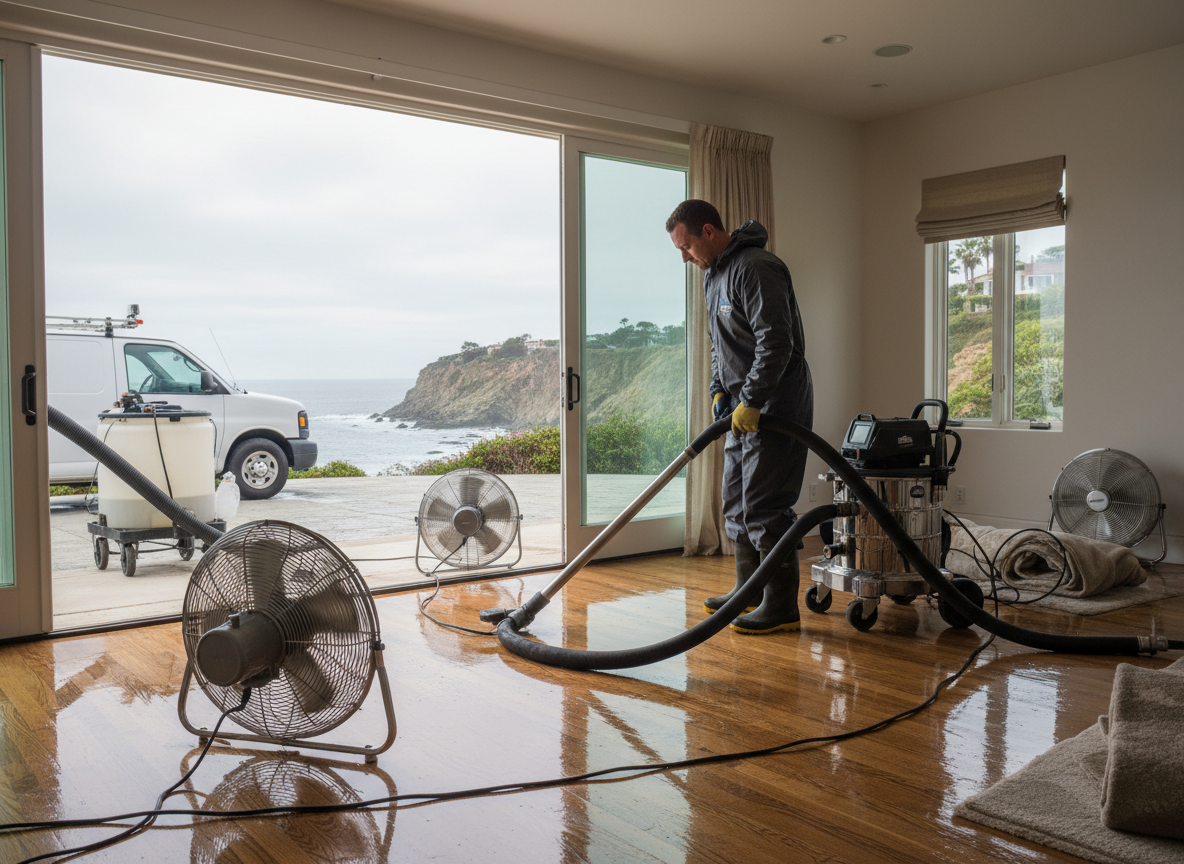
Water extraction in Corona Del Mar often starts in older single-family homes built on slabs in Corona del Mar Village where narrow side yards and bluff-side grading limit pump and hose placement. Cool wet winters bring repeated roof and window leaks that saturate hardwood floors and plaster walls; once moisture reaches the slab edge it travels laterally under tile, requiring moisture meters and targeted removal rather than whole-room drying. Proximity to Corona del Mar State Beach also means occasional saltwater intrusion from storm surge that corrodes metal ductwork faster than fresh water alone.
In Corona Highlands and Irvine Terrace, multi-level homes with finished basements and attached garages create hidden pockets behind HVAC returns and under stairwells. During warm dry summers any remaining moisture quickly feeds mold on paper-faced drywall and carpet padding, so extraction crews must pull baseboards and drill weep holes within the first twenty-four hours. Orange County building practices from the 1960s and 1970s frequently used uninsulated slab plumbing, so a single supply-line failure can flood both the kitchen and the adjacent garage slab before residents notice.
Technicians working from 2929 Pacific Coast Hwy keep truck-mounted extractors and air movers staged for immediate dispatch because traffic on PCH and the Coast Highway loop can add thirty minutes between Corona Del Mar and jobs in nearby Newport Beach or Laguna Beach. After extraction, dehumidifiers run on separate circuits to avoid tripping older electrical panels common in the village; crews also document moisture readings at multiple depths so homeowners can show insurers the exact extent of affected material.
Technician insight
In Corona Del Mar the thing that catches most people out with water extraction is the older slab homes in Corona del Mar Village where narrow bluff-side access and uninsulated plumbing runs let water travel under tile into the garage before anyone notices; once the dry summer heat hits, that hidden moisture turns into mold on the back of drywall within days.
Garage Slab Flood After Winter Storm
Heavy rain overwhelmed a roof drain on a Corona Highlands home and water migrated under the slab into the finished garage. Extraction crews used narrow wands to pull water from beneath cabinets and drilled weep holes along the perimeter. Daily drying logs showed moisture levels drop below threshold in four days, allowing the homeowner to reinstall baseboards without further demolition.
How it works
- 1
Arrival and Safety Setup
Technicians park at the address, verify power and gas shutoffs, and place containment barriers to protect unaffected rooms.
- 2
Standing Water Removal
Truck-mounted pumps and wands extract bulk water from floors, carpets and hard surfaces while monitoring for hidden pockets behind cabinets.
- 3
Moisture Mapping and Targeted Extraction
Infrared cameras and pin meters locate residual moisture in walls, subfloors and slab edges; small holes or baseboard removal allow direct extraction.
- 4
Drying and Monitoring
Air movers and dehumidifiers are positioned; daily readings confirm moisture levels drop below 15 percent before equipment is removed.
- 5
Final Documentation
Photos, meter logs and a written summary are provided for insurance and homeowner records.
Pricing
Cost depends on water volume, number of affected rooms, and whether slab or wall cavities require extra access points.