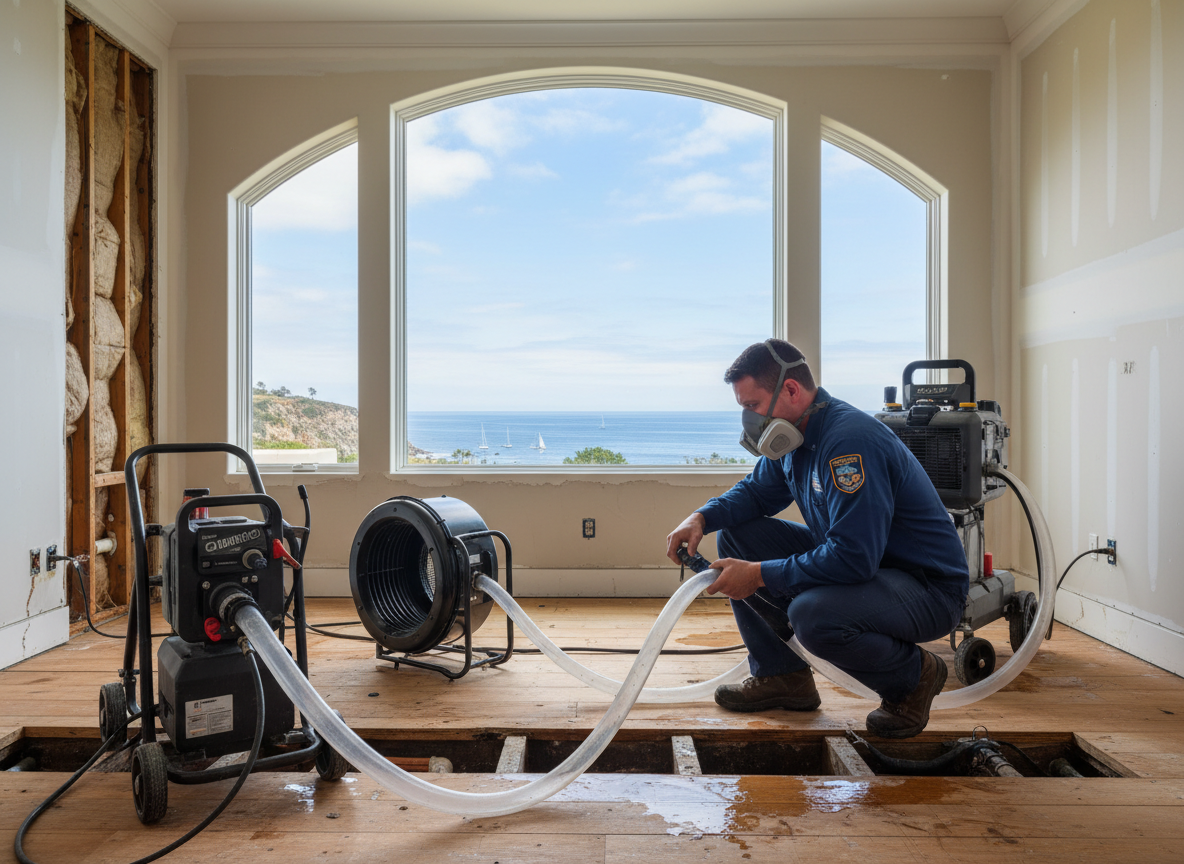
Water leaks in Corona Del Mar often originate from aging galvanized lines in homes built before the 1970s around Corona del Mar Village. These leaks travel along slab foundations and can reach framing before visible signs appear on walls. Technicians use thermal imaging and pin meters to map moisture behind stucco and drywall, then isolate the source without unnecessary demolition. Because winters bring steady rain while summers stay dry, undetected moisture can linger in wall cavities until mold colonies form.
Coastal humidity combined with the mild Mediterranean climate means extracted water must be removed quickly to prevent secondary damage to hardwood floors common in Irvine Terrace properties. Crews set up containment barriers and negative air machines to protect unaffected rooms, then apply antimicrobial treatments only where moisture readings exceed 15 percent. Slab leaks near the bluff require careful shoring because soil conditions shift with tidal influence from the nearby Pacific.
After drying, technicians document every step for insurance adjusters and coordinate with local plumbers for permanent line repairs. In homes near Sherman Library and Gardens, crews protect mature landscaping by routing equipment through side yards rather than main entrances. Final clearance testing confirms moisture levels match unaffected areas before any reconstruction begins.
Seasonal Considerations
Winter storms increase leak frequency in older Corona Del Mar homes while dry summers allow hidden damage to spread undetected until humidity rises again.
Technician insight
In Corona Del Mar, the thing that catches most people out with water leak restoration is how cool winter rains push moisture under older slab foundations in Corona del Mar Village homes, then the dry summer heat hides the problem until it reaches framing near the bluff path.
Slab Leak in Irvine Terrace Residence
A homeowner noticed buckling hardwood after winter rains. Inspection revealed a pinhole leak under the slab that had traveled toward the garage. Extraction and targeted drying prevented mold growth before the dry season began.
How it works
- 1
On-Site Assessment
Technicians arrive within hours, locate the leak source, and document moisture levels throughout the structure using calibrated meters.
- 2
Water Extraction and Containment
Standing water is removed with truck-mounted pumps and portable extractors while barriers prevent spread to dry zones.
- 3
Drying and Monitoring
Industrial air movers and dehumidifiers run until readings return to normal, with daily checks logged for the homeowner.
- 4
Sanitization and Documentation
Affected materials receive antimicrobial application where needed and a full report is prepared for insurance.
Pricing
Pricing is determined after on-site assessment because leak location, materials affected, and drying duration vary by property.