2026-10-14 ·
What Influences Water Damage Restoration Costs In Corona Del Mar
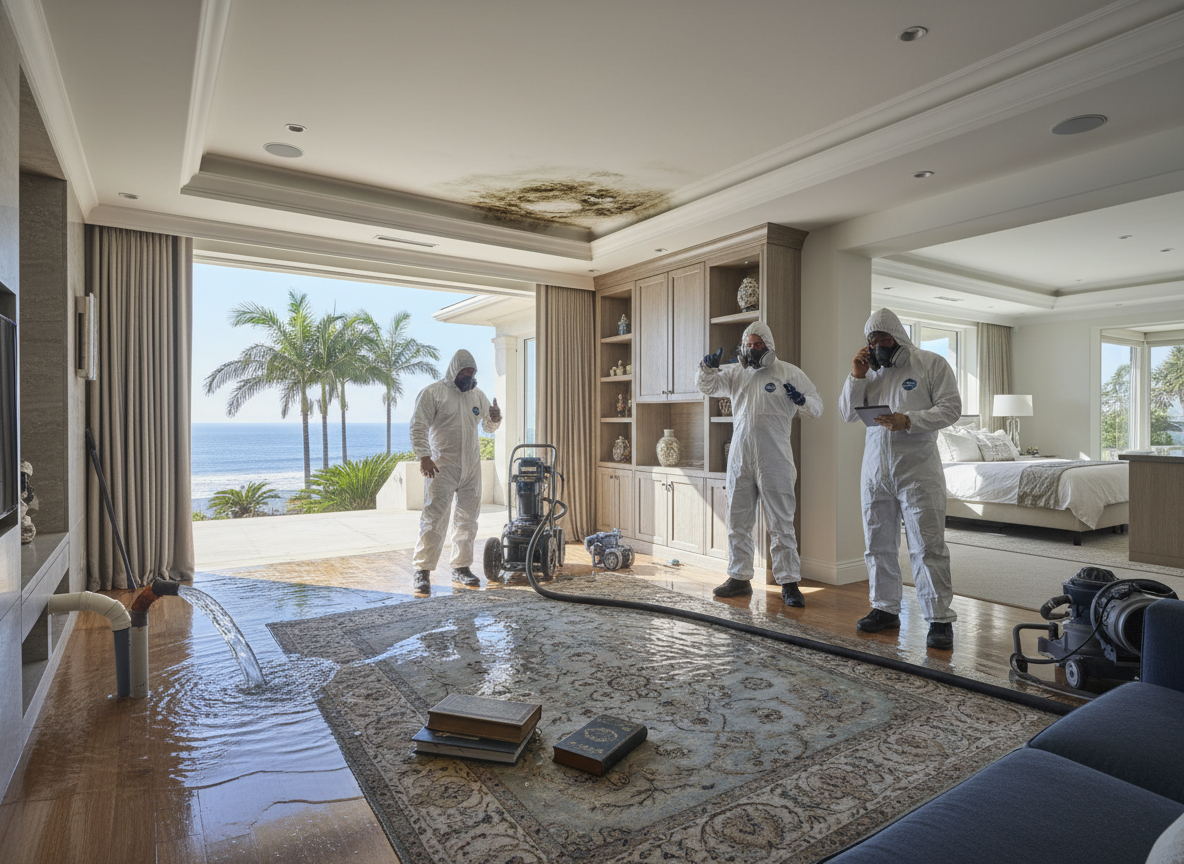
Water damage restoration costs in Corona Del Mar typically range from $1,800 to $5,200 for most residential jobs, depending on square footage affected, water category, and how quickly drying begins. Homes in Corona del Mar Village and Irvine Terrace often see higher totals because many structures date to the 1950s and 1960s with plaster walls and single-layer flooring that absorb moisture deeply. The mild Mediterranean climate brings concentrated winter rainfall that can overwhelm older roof flashings and hillside drainage, turning small leaks into larger structural issues within days.
Home Age and Construction Materials
Corona Del Mar contains a high concentration of mid-century homes built before modern moisture barriers became standard. In Corona Highlands and along the Corona del Mar Bluff Path, many residences feature original hardwood subfloors and lath-and-plaster walls that wick water farther than drywall. These materials require longer drying times and often need selective demolition rather than simple extraction. Properties near Sherman Library and Gardens frequently sit on slightly elevated lots where clay soils retain moisture against foundations during the cool, wet winter months. Technicians must account for hidden saturation behind built-in cabinetry and under tile in bathrooms common to these homes. When water reaches multiple layers, costs rise because crews perform targeted moisture mapping and may need to remove sections of flooring to reach wet cavities. Older plumbing runs also increase the chance of repeated leaks, extending the mitigation phase beyond the initial 48-hour window.
Seasonal Weather and Terrain Effects
Orange County’s cool, wet winters from December through March deliver the majority of annual rainfall in short, intense storms. Water running down slopes toward Corona del Mar State Beach can enter crawl spaces and lower levels in Irvine Terrace homes built on the bluff edge. Warm, dry summers allow faster evaporation on the surface but trap humidity inside wall cavities, promoting hidden mold if extraction is delayed. Crews responding after a January storm often find that water has traveled along the natural grade toward Newport Beach and Laguna Beach boundaries, affecting multiple rooms. This terrain-driven movement means restoration teams must place more drying equipment and monitor readings for longer periods than in flat inland areas. Properties with limited access along Pacific Coast Highway also add time for equipment staging, directly increasing labor totals.
Scope of Damage and Required Services
Category 1 clean water from supply lines costs less to handle than Category 3 water from external flooding near the beach. In Corona del Mar Village, a typical ceiling leak from a roof valley may require only water damage mitigation and drying, while a sewer backup demands full containment and disposal. Square footage directly multiplies equipment and labor hours; a 300-square-foot affected area can double the price of a 150-square-foot job. Homes near the bluff path often need extra dehumidification because ocean air keeps relative humidity elevated even in summer. When secondary damage appears, such as warped trim or stained drywall, additional repairs push totals higher. Early emergency water removal within the first four hours keeps many jobs at the lower end of the range by limiting migration into adjacent rooms.
Practical Steps That Affect Final Pricing
Homeowners who document the source and limit foot traffic after discovery reduce both the spread of water and later disputes with insurers. Scheduling prompt extraction prevents the need for more invasive demolition later. For older residences, pairing mitigation with targeted drying strategies outlined in resources on drying out water-damaged areas in older Corona Del Mar homes helps control expenses. Technicians at 2929 Pacific Coast Hwy respond 24/7 and begin with moisture readings before quoting ranges, allowing owners to understand exactly which rooms and materials drive the price. Comparing quotes from companies familiar with local soil conditions and construction types avoids surprises when hidden damage surfaces during the drying phase.